Author: Jason Bacani
Key2 Consulting is registered Databricks Consulting Partner. Databricks’ goal is to be a data analysis platform that democratizes data and AI so that every company can quickly make smarter and informed decisions to lead within their industries.
On Thursday morning, 11 AM ET/08 AM PT, Databricks held their Q3 Product Roadmap Webinar, though much of what was covered was noted as confidential and proprietary. This recap though will cover what has been publicly announced, while covering what to expect, coming soon from Databricks.
Of note, very recently, Databricks has been recognized as a Leader in the IDC MarketScape: Worldwide Data Platform Software 2025 Vendor Assessment. This is in addition to being a leader in the 2025 Gartner Magic Quadrant for Data Science and Machine Learning Platforms. Suffice to say, Key2 Consulting’s mission to help companies get the most of their data includes partnering and leveraging the extensive and recognized Databricks data intelligence platform.
Here is an overview of the Databricks Data Intelligence Platform:
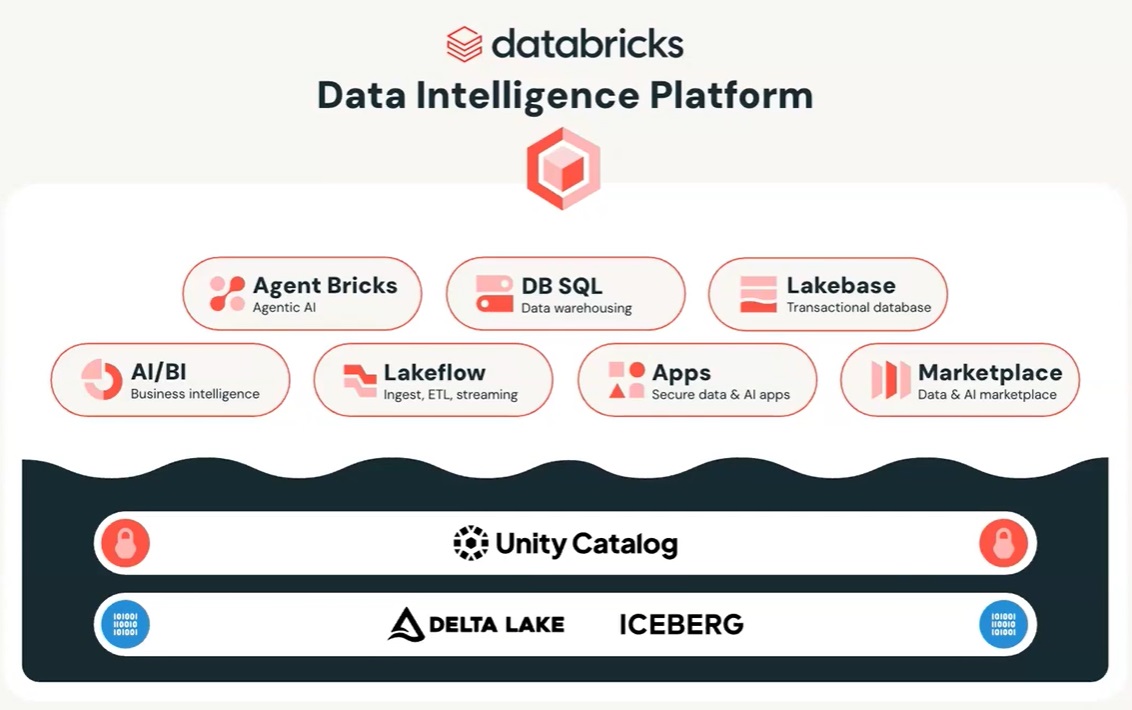
From these many features, here are some highlights from today’s product roadmap:
- Agent Bricks will feature Mosaic AI, which as unified platform, will allow for building, evaluating, deploying, and most of all, governing AI Agents.
- Lakebase and database projects, hosted in a fully managed Postgres database that is integrated with the Lakehouse, so you can easily build data and AI applications on Databricks.
- Unity Catalog implementation of ABAC, attribute-based access controls, and additionally improving exclusive access for RBAC, role-based access controls. Differing from RBAC which grants permissions based on a user’s predefined job role, ABAC grants permissions based on a combination of dynamic user, resource, and environmental attributes.
- Use of AI/BI for Data Classification, to intelligently detect, tag, and protect sensitive data, including automatically identifying 12+ types of PII.
- Databricks SQL and Lakebridge, with enterprise SQL features, giving more power to control data with SQL, including use of stored procedures and SQL scripting, multi-statement transactions, and spatial SQL involving geometry and geography data types.
- Improvements to Lakeflow, Databricks’ unified data engineering solutions for ingestions, transformation, and orchestration, which include connectors to Google Analytics, ServiceNow, and SQL Server.
While the above list only captures a fraction of what’s to come with Databricks, the Databricks Data Intelligence Platform continues to the leader that brings AI to your data, to help bring AI to the world.
For more info about Databricks, visit here for ‘What is Databricks’.
Visit here for more information about Key2 Consulting and its Databricks Consulting Services, or visit here to contact Key2 Consulting for our help in getting the most of your data.